












The ROI of Ultrasound-Guided Vascular Access


For decades, vascular access was a procedure governed by anatomical landmarks and tactile feedback—essentially a “blind stick.” However, the integration of Point-of-Care Ultrasound (POCUS) has shifted the standard of care.
Beyond the obvious clinical benefits, there is a powerful economic argument for the adoption of ultrasound-guided vascular access in modern healthcare facilities. For administrators and clinicians alike, the “Return on Investment” (ROI) is becoming impossible to ignore.
The Clinical Shift: Precision Over Palpation
Traditional landmark-based techniques rely on the assumption that a patient’s anatomy follows a textbook map. In reality, factors such as obesity, dehydration, and anatomical variants make the “blind stick” a high-risk gamble.
By utilizing ultrasound-guided vascular access, clinicians can visualize the vessel, surrounding structures (like nerves and pleura), and the needle trajectory in real-time.
Key Procedural Advantages:
- Increased First-Pass Success: Direct visualization significantly reduces the number of needle punctures required to cannulate a vein.
- Reduced Complication Rates: Real-time guidance drastically lowers the incidence of accidental arterial puncture, hematoma formation, and pneumothorax.
- Enhanced Patient Experience: Fewer “pokes” lead to higher patient satisfaction scores (HCAHPS) and reduced procedural anxiety.
Financial Insight: A single iatrogenic pneumothorax resulting from a landmark-based central line attempt can increase a patient’s hospital stay by 4–7 days, adding upwards of $15,000 to $30,000 in non-reimbursable costs. Preventing just two of these incidents often pays for a high-quality portable ultrasound scanner.
Calculating the ROI: Three Economic Drivers
When evaluating the purchase of ultrasound scanners, administrators must look at how ultrasound-guided vascular access impacts both direct and indirect savings.
1. Material Efficiency
Multiple failed attempts consume multiple vascular access kits, tegaderms, and local anesthetics. By achieving first-pass success through ultrasound-guided vascular access, departments can reduce their monthly supply spend by 15–20%.
2. Labor Optimization and Throughput
In many hospitals, a “Difficult Access” patient can tie up two or three nurses for over an hour. Using POCUS reduces procedural time from an average of 25 minutes (for difficult landmark sticks) to under 5 minutes with guidance. This allows nursing staff to return to high-value patient care tasks sooner.
3. Escalation Avoidance
Ultrasound often allows for the placement of a peripheral IV or a Midline in a patient who would have otherwise required a more expensive and invasive Central Venous Catheter (CVC) or a PICC line placed by a specialized team.
Choosing the Right Scanner for Vascular Access
To maximize the ROI of your equipment, you must select hardware tailored for vascular imaging. Look for these four critical features:
| Feature | Why It Matters |
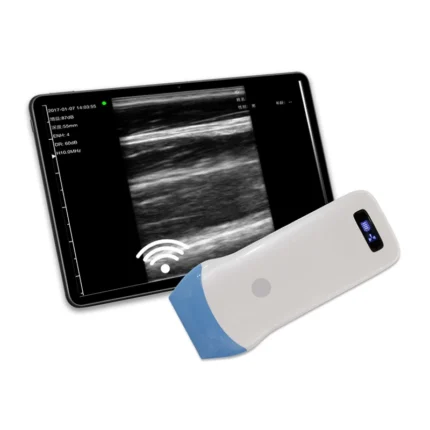
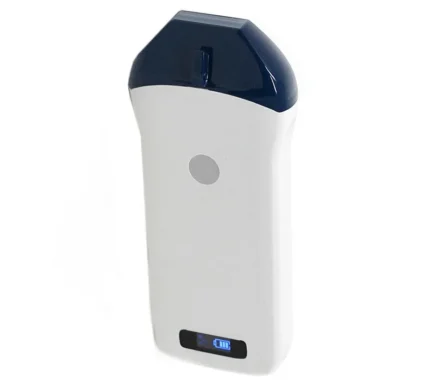
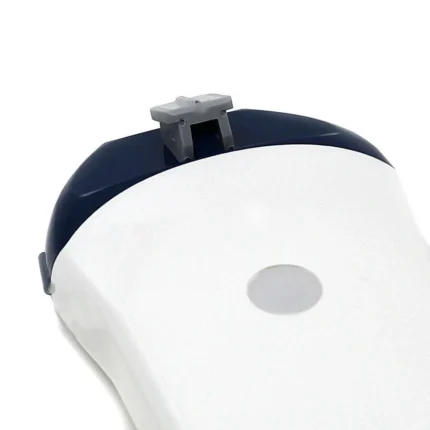
| High-Frequency Linear Probe | Provides the resolution needed to distinguish a needle tip from the vessel wall. |
| Needle Enhancement Software | Digitally brightens the needle to prevent “losing” the tip during deep insertions. |
| Steerable Color Doppler | Essential for distinguishing between non-pulsatile veins and pulsatile arteries. |
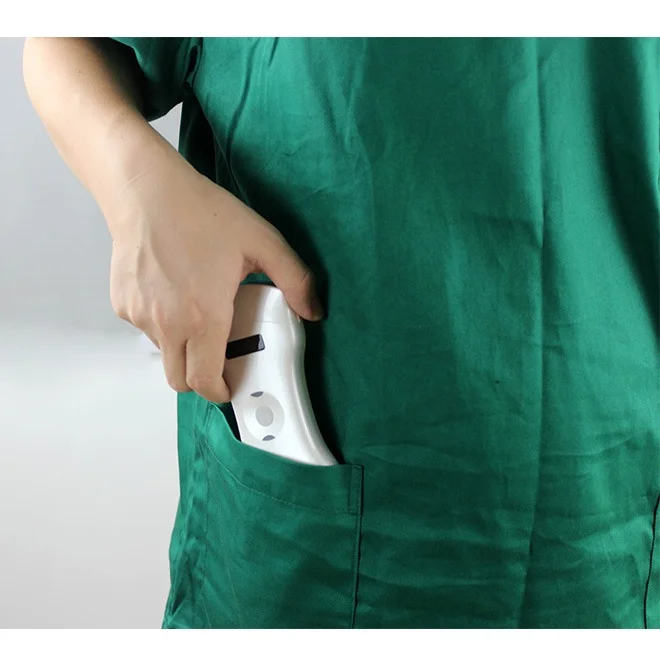
| Wireless Portability | Allows for rapid deployment at the bedside without cable interference in sterile fields. |
Conclusion: A Strategic Investment
The transition from “Blind Stick” to ultrasound-guided vascular access is no longer just a clinical preference; it is a financial necessity. For healthcare providers, investing in high-resolution, portable ultrasound scanners represents a rare “win-win”: improving patient safety while simultaneously bolstering the bottom line through complication avoidance and operational efficiency.
Key Takeaways
- Ultrasound-guided vascular access replaces blind techniques, enhancing precision and safety.
- This method increases first-pass success, reduces complications, and improves patient satisfaction.
- Clinicians can save 15-20% on supplies by decreasing the number of failed attempts with ultrasound guidance.
- Investing in ultrasound scanners streamlines nurse workflow and prevents costly escalation to more invasive procedures.
- Critical features for effective scanners include high-frequency probes, needle enhancement software, and wireless portability.


